




Transform Your Closet: A Step-by-Step Guide to Perfect Organization
An organized closet not only saves you time but also enhances your daily routine and boosts your confidence. Whether you’re dealing with a small wardrobe or a walk-in closet, this comprehensive guide will walk you through the process with practical tips, visual steps, and expert advice to make organizing manageable and stress-free for beginners.
Step 1: Empty and Evaluate Your Closet
Start by removing everything from your closet. This might seem daunting at first, but it’s a critical step to assess what you truly own. Lay out all your clothes, shoes, accessories, and other items in a clear space such as your bed or a large table.
Once everything is out, evaluate each item. Ask yourself if it fits, if you’ve worn it in the last year, or if it still brings you joy. This step helps in decluttering and makes organizing easier. Consider creating three categories: Keep, Donate/Sell, and Discard.
Tip: Be honest with yourself—if you haven’t worn an item in over a year, consider letting it go. According to a survey, the average person wears only about 20% of their wardrobe regularly.
Step 2: Sort Items by Category
Organize your kept items into categories such as shirts, pants, dresses, undergarments, and accessories. Using clear bins or baskets can help you keep similar items together and easily accessible. Labeling these containers ensures quick retrieval during daily routines.
For example, group all your t-shirts together, then your jeans, followed by your formal wear. Sorting by category makes it easier to see your inventory, identify duplicates, and determine what needs replacing or upgrading.
Tip: Use this phase to identify duplicates or items you no longer need, reducing clutter by at least 30%, according to some decluttering studies.
Step 3: Decide on a Space & Organizing System
Understanding your closet’s space and layout is essential for effective organization. Measure your closet dimensions, noting shelves, hanging rods, drawers, and available floor space. Decide what storage solutions are best suited—such as double hanging rods for shirts, shelf dividers for sweaters, or shoe racks for footwear.
There are various systems available—from minimalistic hanging organizers to modular shelving units. Choose what complements your storage needs. For example, if you have limited space, vertical storage with stackable bins maximizes your area.
Advice from the author: Invest in a versatile wardrobe system that can be customized over time. Good organizers adapt to your changing wardrobe needs and save money in the long term.
Step 4: Implement Your Organizational Solutions
Start putting your categorized items into their designated spaces. Hang clothes on appropriate hangers—using slim, uniform hangers saves space and creates a tidy appearance. Fold sweaters and t-shirts neatly and store them on shelves to prevent wrinkling.
Arrange items by frequency of use—everyday wear at eye level, seasonal items higher or lower, and seldom-used pieces in storage bins. Consider color-coding your wardrobe for an aesthetic touch and easier selection.
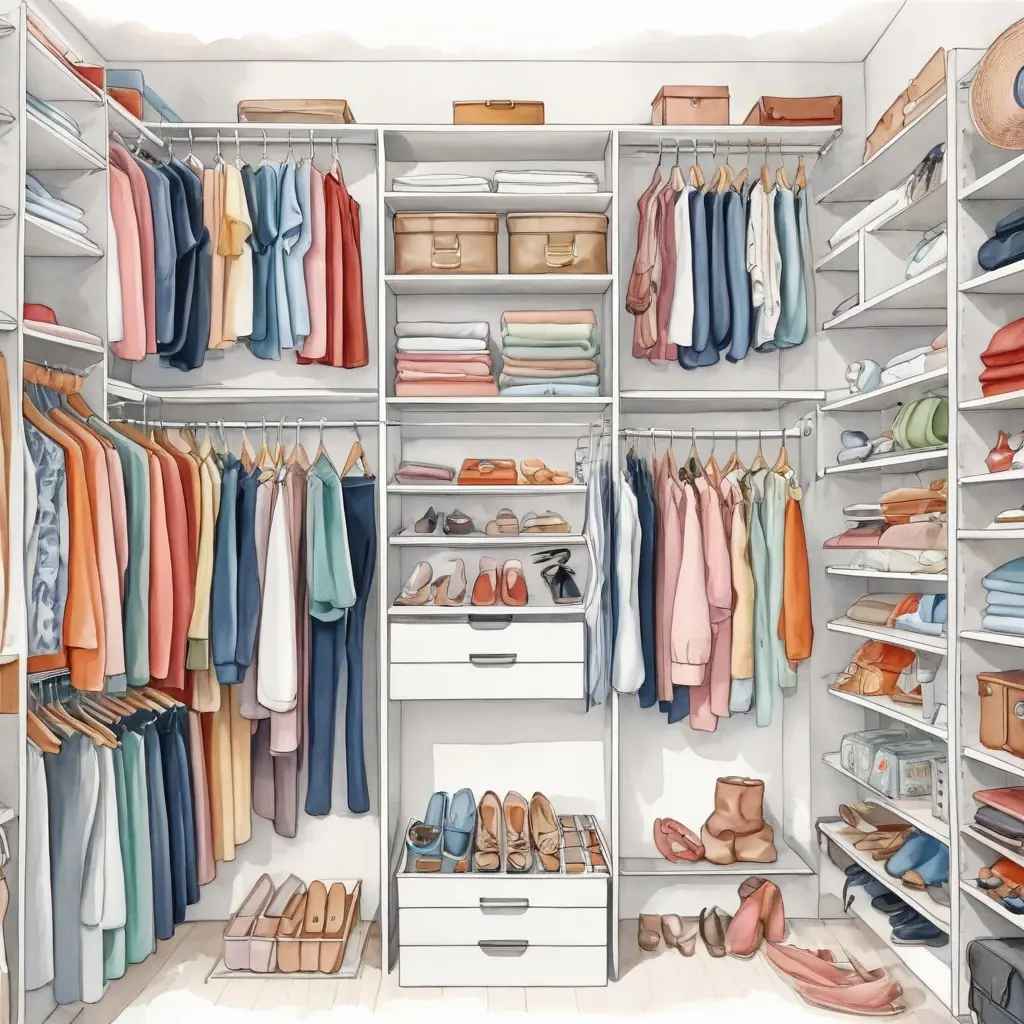
Visual aid: The image shows a neatly organized closet with categorized sections, uniform hangers, and labeled storage bins, illustrating a practical setup for beginners.
Step 5: Maintain and Perfect Your Closet Organization
Regular upkeep is crucial to sustain your organized closet. Dedicate 10-15 minutes weekly to maintaining your system—folding newly washed clothes, reordering items, or reassessing your wardrobe. Seasonally, revisit your clothing to donate or discard items that no longer serve you.
Documentation like a small spreadsheet or notes can help track habits and identify when to refresh your storage setup. Also, get into the habit of putting items back in their designated spots after use.
Expert opinion: A well-maintained closet is less likely to fall into chaos, saves time each morning, and can even extend the lifespan of your clothing through better care.
Additional Tips for Easy Closet Organization
- Use uniform hangers: They save space and create a sleek look.
- Maximize vertical space: Add hooks or hanging organizers.
- Label everything: Clear labels help in quick identification.
- Seasonal sorting: Rotate clothing based on the season to optimize space.
- Involve eco-friendly practices: Donate or sell clothes in good condition instead of discarding.
Benefits of a Well-Organized Closet
Beyond aesthetics, a tidy closet improves your mental clarity, reduces morning stress, and even saves money by helping you recognize duplicate or unused items. Data shows that people who keep organized spaces are more productive and experience less anxiety.
Remember, the goal is progress, not perfection. Start small, be consistent, and enjoy the process of transforming your closet into a space that inspires confidence and efficiency.
Conclusion
Organizing your closet may seem overwhelming initially, but breaking it down into manageable steps makes it achievable for beginners. By decluttering, sorting, planning, and maintaining regularly, you create a space that simplifies your daily routine and enhances your lifestyle. Invest time now, and you’ll reap the benefits of a more orderly, functional wardrobe for years to come.
Q1: How often should I reorganize my closet?
It’s recommended to revisit your closet every three to six months. Regular checks help keep clutter in check, allow for seasonal adjustments, and ensure your storage system remains effective.
Q2: What are the best types of hangers for closet organization?
Uniform, slim velvet or plastic hangers are ideal because they save space, prevent clothes from slipping, and create a uniform look. Avoid wire hangers as they can distort clothing shapes.
Q3: How can I organize small closets efficiently?
Maximize vertical space with hanging organizers, use over-the-door racks, and consider under-shelf baskets. Keep only essential items in the closet to prevent overcrowding, and regularly declutter to maintain order.
Q4: What should I do with clothes I haven’t worn in over a year?
Consider donating, selling, or recycling these clothes. If they’re in good condition, donating can help those in need while freeing up space. If damaged, recycle responsibly or dispose of appropriately.